
Paradoxically, this article is not just about AI.
It is about AI and leadership.
More importantly, it is about judgement — with AI as a pressure test.
After all, AI supplies information.
Humans make decisions — and own them.
Leaders today are given more data than ever before. With the increasing availability and integration of AI tools, answers arrive faster and recommendations are more accessible.
On the surface, this feels like progress.
But it raises a quieter question.
If AI accelerates answers, what happens to judgement?
What Is Judgement in Leadership?
Let’s start with a simple question.
What is judgement?
Is judgement intelligence?
Is it information?
No.
Judgement is the human process of weighing context, consequences, values, and trade-offs.
It is not just about knowing more.
It is about deciding — often with incomplete certainty — and taking responsibility for that decision.
This is why judgement remains firmly human.
AI Can Inform — But Not Decide
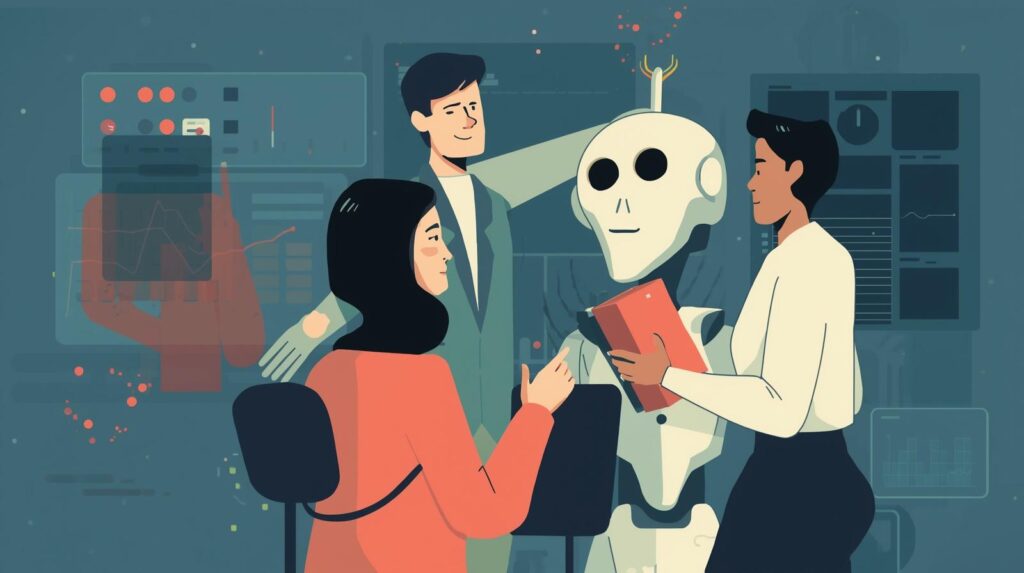
AI is a powerful tool. It can analyze patterns, process data at scale, and generate options quickly. Used well, it can strengthen thinking and improve the quality of decisions.
But AI cannot weigh context in the way a leader must.
It does not understand nuance, relationships, or timing. It does not experience consequences. And it cannot be held accountable when outcomes fall short.
Decisions made purely by relying on AI risk missing the human dimension — especially in leadership roles that involve people, trust, and long-term impact.
Judgement is not optional.
It is the responsibility of the leader.
AI as a Thinking Partner
One of the most valuable roles AI can play is not in replacing judgement, but in improving it.
Good judgement requires clear thinking.
AI, when used well, can help us slow down and think more clearly — not faster and more hastily.
Imagine sitting at your desk, working through an important decision. Having a sparring partner — one that can challenge your assumptions, test your thinking, and surface alternative perspectives — can be invaluable.
This is where AI becomes useful.
Not as a decision-maker, but as a thinking partner.
It can help question our assumptions, highlight blind spots, and act as a quiet challenger when needed.
In this sense:
AI slows thinking down better — it does not simply speed it up.
The Risk of Outsourcing Judgement
There is, however, a subtle risk.
As AI becomes more embedded in decision-making, leaders may begin to rely too heavily on its recommendations.
This is where judgement can quietly be outsourced.
You may have heard phrases like:
“This is what the system suggested.”
At first glance, this seems reasonable.
But pause for a moment.
Is this responsible leadership?
When judgement is outsourced, accountability begins to weaken.
And without accountability, leadership itself is diminished.
Judgement and Accountability
Judgement and accountability are inseparable.
Leaders may not always get decisions right — uncertainty is part of leadership. But what defines leadership is the willingness to own those decisions.
To stand by them when they succeed.
And more importantly, to take responsibility when they do not.
Calm leaders integrate AI into their thinking.
But they do not surrender judgement to it.
Closing Reflection
AI will continue to evolve. It will become more capable, more integrated, and more influential in how organisations operate.
But it will not replace the need for judgement.
In a world of faster answers, leadership may depend less on how quickly we decide — and more on how carefully we choose to own those decisions.
I’d love to hear your thoughts on this.